
Dry Winter Skin: A Gentle Oil and Herbal Balm Routine
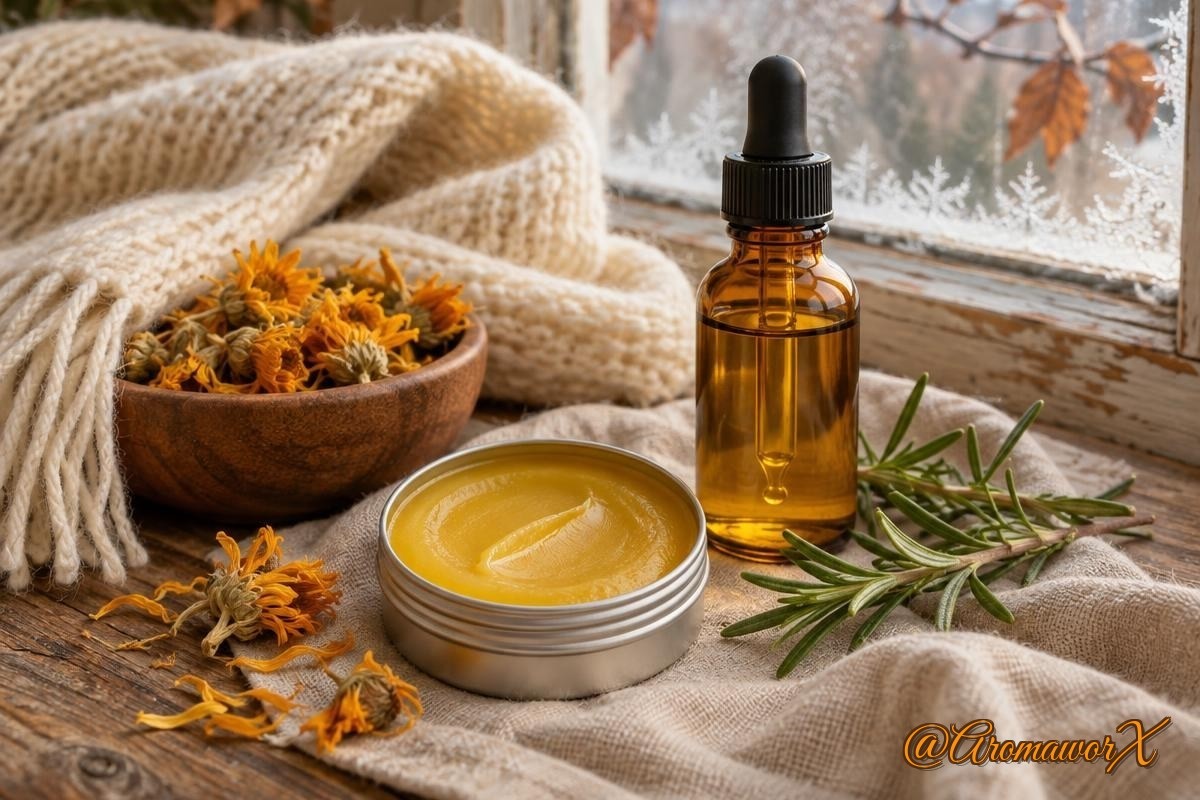
The first hard frost always seems to arrive the same week our hands start to crack. Cold air holds very little moisture, and the heating inside our homes dries things out even more. Skin that felt fine in September can feel tight, flaky and sore by mid-November. The good news is that a few simple, gentle habits go a long way, and most of what you need is already in a kitchen or a well-stocked herb shelf.
Start with the basics
Before any oils or balms, look at the everyday things that strip skin. Very hot showers and baths, harsh soaps and long soaks all pull away the natural oils your skin needs. Lukewarm water, a mild cleanser and patting dry rather than rubbing make a real difference. Then moisturize while the skin is still slightly damp, because that is when oils and balms seal in the most water.
Choose a simple carrier oil
Plain plant oils are the heart of a winter skin routine. Sweet almond oil is light and easy to find. Jojoba is gentle and sits well on facial skin. Olive oil is richer and a good choice for hands, elbows and heels. Choose one you tolerate well, and do a small patch test on the inside of your forearm first, especially if you have nut allergies or sensitive skin.
A few drops massaged into damp skin after a shower is often all it takes. Start with less than you think you need and add more only where skin still feels dry.
Calendula, the traditional skin herb
Calendula has been used for generations in soothing salves for dry, chapped skin. You can infuse the dried flowers in a carrier oil over a few weeks, then use that oil on its own or as the base for a balm. Our guide to making an herbal salve walks through the method step by step, and it is a lovely weekend project when the weather turns.
A simple hand and heel balm
A basic balm is just oil and beeswax. Many people gently melt roughly one part beeswax to four parts infused oil, pour it into a small tin and let it set. Adjust to taste: a little more wax makes a firmer balm for heels, a little less makes a softer one for hands. Keep your hands and tools very clean and dry so no water gets into the balm, and use it within a few months.
If you add essential oils
Essential oils are optional. If you enjoy a scent, lavender is a gentle choice for most adults. Keep it low, around one percent or less for face and body, which is about five or six drops in a fluid ounce of carrier oil. Our dilution guide has the full numbers. Skip essential oils on broken or cracked skin, and always check our guide on pregnancy, children and pets before using anything around them.
Small habits that help
- Run a humidifier or place a bowl of water near a radiator to add moisture to dry rooms.
- Wear gloves outside and cotton-lined gloves for washing dishes.
- Drink water and eat good fats such as olive oil, nuts and seeds.
- Sleep with a little balm on cracked heels and cotton socks over top.
When to get help
Dry skin is usually a comfort problem, not a medical one. If you have red, weeping, very itchy or painful patches, signs of infection, or dryness that does not improve with gentle care, please see a doctor. It could be eczema or another condition that needs proper attention.
Be kind to your skin this winter. A little oil, a little balm and a little warmth go a long way.
This article is for general education only and is not medical advice. Essential oils are for external use unless a qualified professional directs otherwise, always diluted, and not suitable for everyone. If symptoms are severe or last more than a few days, please speak with your doctor.
Comments