
Cold and Flu Season: A Gentle Herbal and Essential Oil Toolkit
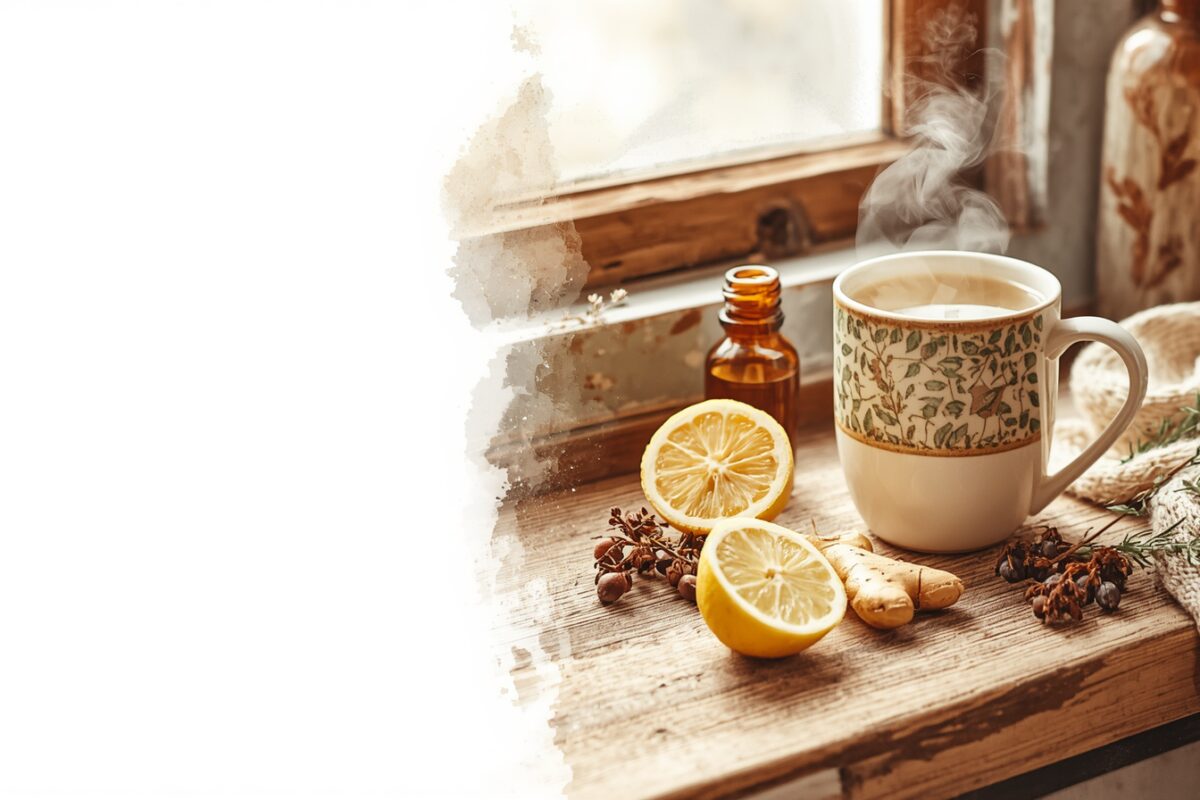
Every autumn the same thing happens in our house: somebody sneezes in the grocery store, and the next week half the family is sniffling. We have never found a trick that makes a cold disappear. What we have found is a small kit of gentle, comforting things that make a cold easier to get through and, on a good year, help us avoid the worst of it.
Start before you feel sick
Honestly, the boring basics matter most: sleep, water, real food, fresh air, and washing your hands properly. Plants and aromatics are support, not a substitute. With that said, here is what we keep within reach.
In the kitchen
- Ginger, lemon and honey tea. Slice a thumb of fresh ginger, simmer it in two cups of water for ten minutes, then add lemon juice and a spoonful of honey once it has cooled a little. Warm, soothing, and good for a scratchy throat. Honey should not be given to children under one year old.
- Thyme or sage steam tea. A few fresh sprigs steeped for ten minutes in a covered mug. Breathe in the steam as it cools and sip slowly.
- Elderberry syrup. Many people take it through the season. Follow the product directions and ask your pharmacist if you take regular medication.
- Broth, soup, and plenty of fluids. Not glamorous, always helpful.
In the air
Eucalyptus and peppermint are the two aromas most of us reach for when our noses feel stuffed. A diffuser with 3 drops of eucalyptus (Eucalyptus globulus or radiata) and 2 drops of lemon gives the room a clean, bright smell, and many people find that it makes breathing feel more open. Tea tree is another popular choice for a fresh, clean-air feeling. Run the diffuser for 20 to 30 minutes at a time and air out the room afterward.
A chest and shoulder rub
Mix 5 drops of eucalyptus and 3 drops of lavender into 2 tablespoons of a carrier oil, such as sweet almond or jojoba. Massage a little onto the chest and upper back. That is roughly a 2 percent dilution, which is fine for healthy adults for short-term use. For children, use a much lower dilution or skip peppermint and eucalyptus altogether; they are not recommended for babies and very young children.
A steam bowl, done carefully
Pour hot, not boiling, water into a large bowl, add 1 or 2 drops of eucalyptus, drape a towel over your head, close your eyes and breathe slowly for a couple of minutes. Keep your face at a comfortable distance. Skip this if you have asthma or sensitive airways, and never do it with children.
Rest like it is your job
The best remedy is also the least exciting one: stay home, sleep, and let your body do the work. Cancel something. The world will cope.
When to call the doctor
Seek medical advice for a high or lasting fever, trouble breathing, chest pain, severe sore throat, symptoms that last more than ten days or get worse after a few days of improving, or any illness in a baby, an older adult or someone with a chronic condition. Pregnant? Check before using essential oils. Our pregnancy, children and pets guide is a good place to start.
This article is for general education only and is not medical advice. Essential oils are for external use unless a qualified professional directs otherwise, always diluted, and not suitable for everyone. If symptoms are severe or last more than a few days, please speak with your doctor.
Comments