
Building an Essential Oil First Aid Kit
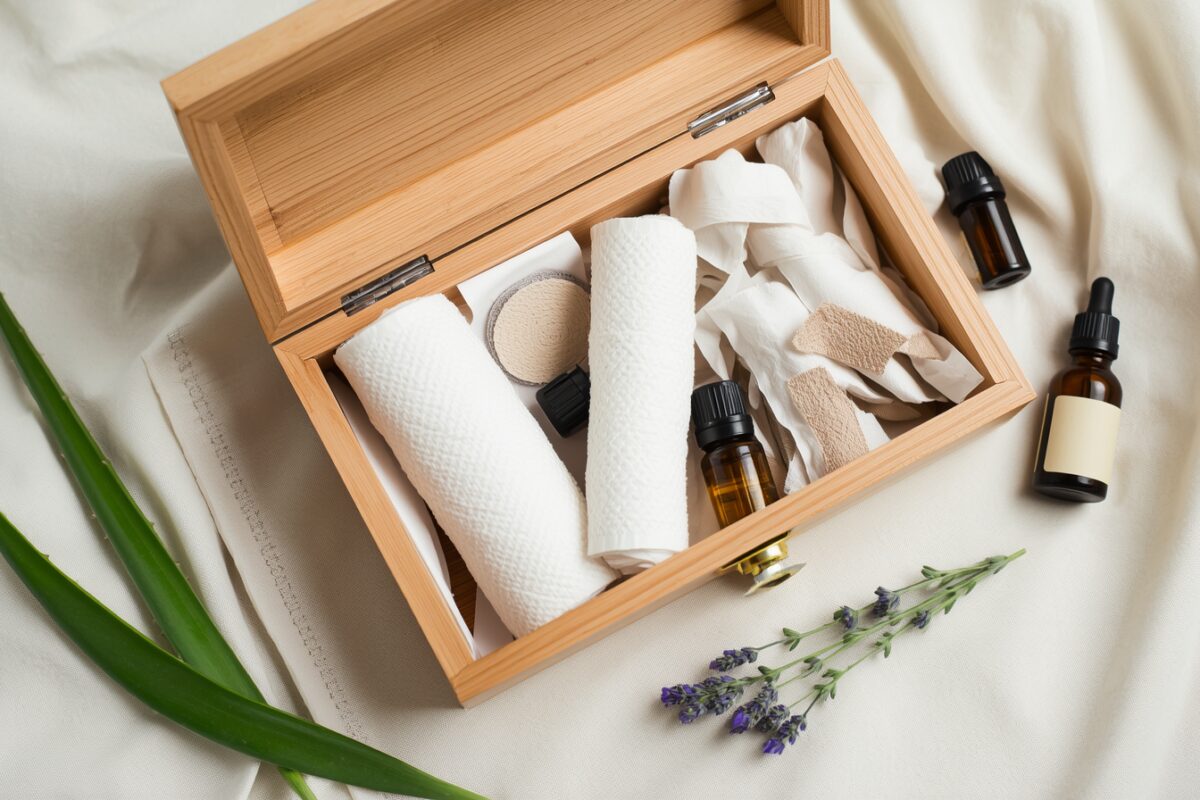
A well-stocked first aid kit is the foundation of any home, car, cottage or travel bag. Essential oils can be a pleasant addition for minor, everyday mishaps, but they are a supplement to proper first aid supplies, never a replacement. This guide shows what to keep on hand and how to store it safely.
Start with the basics
Before any oil goes into your kit, make sure you have the essentials every kit needs: sterile gauze pads and rolls, adhesive bandages in several sizes, medical tape, a clean cloth for compresses, tweezers, small scissors, saline or clean water for rinsing, disposable gloves, a cold pack, a thermometer and a printed list of emergency numbers. Check expiry dates twice a year.
Five essential oils worth having
- Lavender – the classic all-rounder, traditionally used for minor burns after cooling, minor skin irritations, headaches and to calm nerves and promote rest.
- Tea Tree – traditionally valued for its cleansing qualities and used in dilution on minor cuts, scrapes, insect bites and blemishes, and for athlete’s foot.
- Peppermint – cooling and refreshing, traditionally used for tension headaches and to ease queasiness when inhaled. Do not use on or near the face of babies and young children.
- Eucalyptus – a clearing, camphoraceous oil traditionally inhaled for stuffy noses and used in chest rubs for adults and older children.
- Roman Chamomile – gentle and soothing, traditionally used for irritated skin, teething-age restlessness (under professional guidance only) and general calming.
You may also like to add Clove Bud for toothache relief in a cotton ball held near, never on, the gum (it is strong and can burn), and Lemon for freshening. Use clove with extra care and keep it well away from children.
Carriers and companions
- A small bottle of a gentle carrier oil such as sweet almond or jojoba for diluting oils (avoid almond if there is any nut allergy). See our carrier oils guide.
- Aloe vera gel for sun-warmed skin, and calendula cream or salve for dry, irritated skin.
- A few empty roll-on bottles, a dropper bottle and cotton balls.
- A small notebook to label blends with the ingredients, the dilution and the date you made them.
A simple all-purpose dilution
For adults, a typical gentle skin dilution is about 1 percent: roughly 5 to 6 drops of essential oil per 30 mL (1 fl oz) of carrier oil. Use half of that for older adults, and only after professional advice for children, pregnant women and anyone with sensitive skin or medical conditions. Always patch test a small area first and wait 24 hours.
Storing your kit
- Keep oils in dark glass bottles with tight caps, away from heat, sunlight and flame. Essential oils are flammable.
- Store the whole kit out of reach of children and pets. Several oils are dangerous if swallowed or licked, and some are toxic to cats and dogs.
- Label everything clearly. Replace citrus oils about every year and most others every two to three years, or sooner if the scent changes.
Know when oils are not enough
Essential oils are for minor, everyday situations only. For deep or bleeding wounds, large or blistering burns, suspected fractures, head injuries, breathing difficulty, severe allergic reactions or any situation that worries you, call your emergency number and get professional help. Read First Aid With Essential Oils for traditional suggestions on dozens of minor ailments, and please review our Health Disclaimer before using any oil.
Comments