
How to Make a Safe Aromatherapy Roll-On
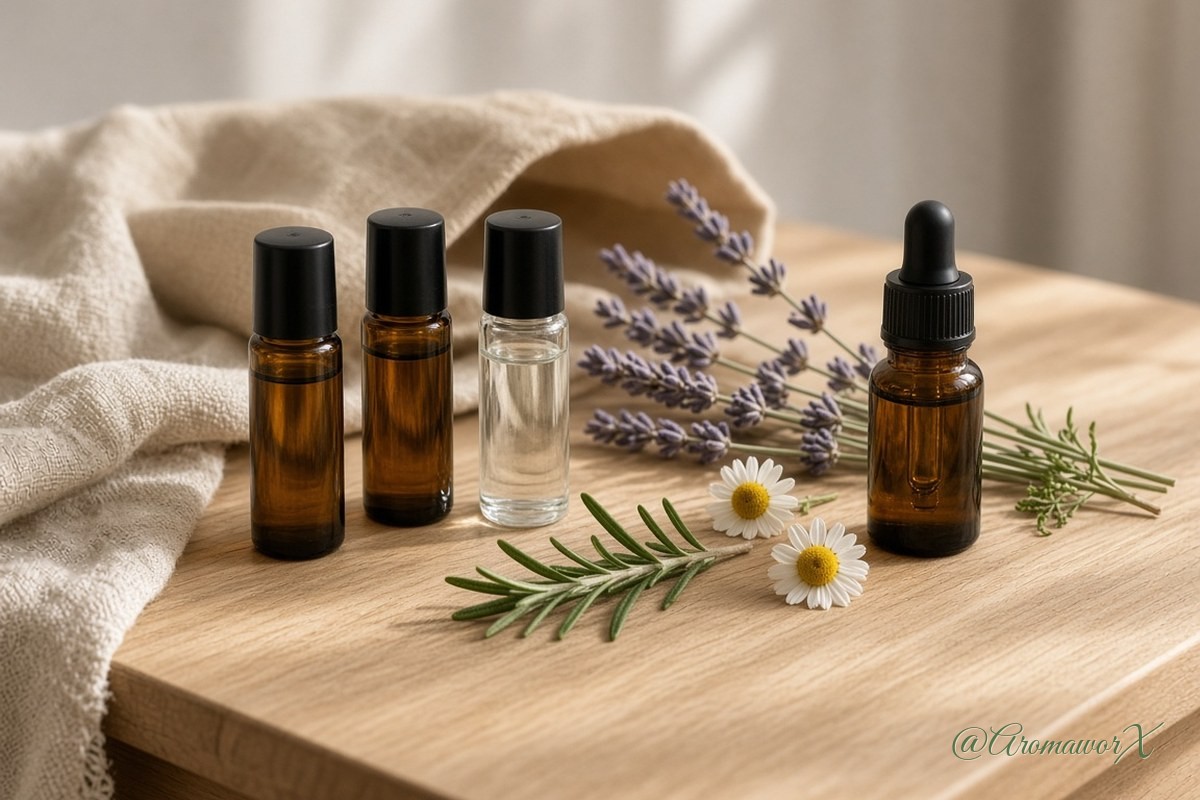
A roll-on bottle is one of the simplest ways to bring aromatherapy into a busy day. There is no diffuser to plug in and no jar to open, and it slips easily into a pocket or purse. A few drops of essential oil in a carrier oil, a quick swipe on the wrists, and you have a small personal scent ritual wherever you are.
Because a roll-on goes straight onto skin, the details matter. This guide covers what you need, how much essential oil to use, three gentle starter blends, and the safety points worth knowing before you begin.
What You Need
- A 10 ml glass roller bottle. Amber or cobalt glass helps protect oils from light. Choose one with a snug roller ball and a secure cap.
- A carrier oil. Fractionated coconut oil stays liquid and has little scent. Jojoba is a gentle, stable choice. Sweet almond oil is lovely but should be avoided by anyone with a nut allergy.
- Essential oils from a reputable supplier, with the botanical name on the label.
- A small funnel or dropper (optional but helpful), and a label and pen.
Getting the Dilution Right
Essential oils are highly concentrated and are not meant to be applied undiluted. For a roll-on, a general guide for healthy adults is a 1 to 2 percent dilution. A 10 ml bottle holds roughly 200 drops, so the numbers work out like this:
- 1 percent: about 2 drops of essential oil in 10 ml of carrier oil. Good for daily use, sensitive skin and your first batch.
- 2 percent: about 4 drops of essential oil in 10 ml. A common upper limit for occasional adult use.
More is not better. A stronger blend does not make the aroma more pleasant, and it raises the chance of skin irritation or sensitization, which is an allergy-type reaction that can develop over time with repeated exposure to a strong oil.
How to Make It
- Wash and fully dry your bottle so no water is left inside.
- Add your essential oil drops first.
- Top up with carrier oil, leaving a little space at the neck.
- Press in the roller ball, screw on the cap, and gently roll the bottle between your palms to mix.
- Label it with the oils, the dilution and the date.
Let the blend rest for a day if you can. The aroma often rounds out and becomes softer.
Three Gentle Starter Blends
Each recipe is for a 10 ml bottle filled with carrier oil. They are intended for adults, and the drop counts keep them at roughly 1.5 percent or less.
Evening Unwind
- 2 drops lavender
- 1 drop Roman chamomile
Soft, floral and herbal. Traditionally, these oils have been used in calming bedtime rituals. Roll it on the wrists or the back of the neck, then take a few slow breaths. If you enjoy a full wind-down routine, you may like our simple evening routine with lavender and cedarwood.
Desk Focus
- 2 drops rosemary
- 1 drop lemon-free citrus alternative: sweet orange, or simply leave it out for a pure rosemary blend
Rosemary has a bright, herbaceous scent that has long been used to make workspaces feel fresh and awake. Rosemary is best avoided by people with epilepsy and used with care by anyone with high blood pressure, so check with a health professional if either applies to you. You can read more about the plant on our rosemary page.
Grounded Calm
- 2 drops geranium
- 1 drop frankincense
A rounded, slightly sweet and resinous blend that many people find steadying during a hectic afternoon or before a stressful conversation. For more ideas on pairing aromas, see 3 Essential Oil Recipes For Calm, Focus & Clearing.
Patch Test First
Before using a new roll-on, do a patch test. Apply a small amount to the inner forearm, cover it with a bandage if you like, and wait 24 hours. If you notice redness, itching or discomfort, wash the area with plain soap and water, and do not use the blend. If irritation happens, a little plain carrier oil on the area can help soothe it.
Where to Apply, and Where Not To
- Good spots: inner wrists, behind the ears (not in the ear), the back of the neck, and the upper chest over clothing-free skin.
- Avoid: the eyes, inner nose, lips, broken or inflamed skin, and genital areas. Wash your hands after applying.
- Be careful with sun: some citrus oils, especially bergamot and cold-pressed lemon, lime and grapefruit, can make skin more sensitive to sunlight. Keep them out of roll-ons you wear on exposed skin unless the oil is labelled as photo-safe.
Who Should Take Extra Care
- Pregnancy and breastfeeding: Some oils are not recommended during pregnancy. Please speak with your midwife, doctor or a qualified aromatherapist before using any roll-on.
- Babies and children: Do not use these recipes on infants. For children, seek professional guidance, as they need much lower dilutions and a more limited choice of oils. Peppermint in particular should not be used on or near the face of young children.
- Pets: Cats and dogs are sensitive to many essential oils. Do not apply roll-ons to animals, and avoid cuddling pets right after applying a fresh blend. Keep bottles out of their reach.
- Medication and health conditions: If you take regular medication, have a chronic condition, or have very sensitive skin, ask your health professional first.
- Allergies: Check the carrier oil as well as the essential oils, especially if you have nut or seed allergies.
Storage and Shelf Life
Keep your roll-on in a cool, dark place, such as a drawer or a cosmetics bag away from a sunny window or a hot car. Because the blend contains no water, it should keep well for several months, but carrier oils can go rancid. If the scent smells sharp, stale or “off”, it is time to make a fresh batch. For more tips, see How to Store Essential Oils So They Stay Fresh, Fragrant and Safe.
A Small Ritual, Not a Cure
A roll-on is a pleasant way to pause, breathe and connect with a favourite scent. It is not a treatment for any medical condition. If you are feeling persistently anxious, sleeping poorly or experiencing symptoms that worry you, please speak with a qualified health professional.
Start with one simple blend, keep it light, and notice how you feel. Often the most helpful part is the moment of stillness that comes with the scent.
This article is for educational purposes only and is not medical advice. Always dilute essential oils, patch test first, and speak with a qualified health professional, especially if you are pregnant, nursing, taking medication or treating a child.
Comments