
Cardamom
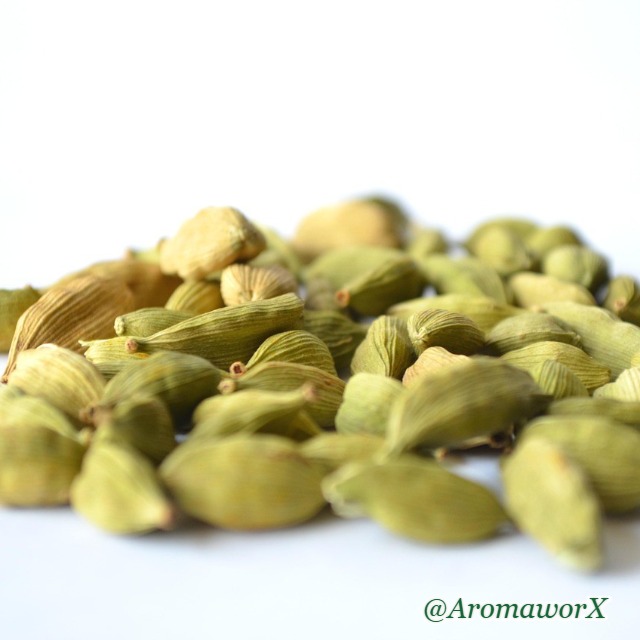
Prized for thousands of years as both a spice and a perfume, cardamom is known as the “Queen of Spices”, and its seeds yield an essential oil that is warm, sweet and gently uplifting.
Elettaria cardamomum
Family: Zingiberaceae (the ginger family)
Note: Top to middle
Parts Used: dried seeds from the ripe fruit pods
Source: steam distillation of the seeds of a tall, leafy perennial herb native to the moist forests of southern India and Sri Lanka. The plant produces small green pods, each holding rows of aromatic brown-black seeds. Cardamom is also cultivated in Guatemala, which is a major producer, and in other tropical regions. For the best aroma the seeds are usually crushed shortly before distilling, since their volatile oils are quickly lost once the pods are opened.
Description and Odor Effect
Cardamom oil is a colourless to pale yellow liquid with a warm, sweet, spicy scent and a fresh, slightly camphoraceous edge, with a soft woody-balsamic dry-down. Its odor effect is stimulating yet comforting: bright enough to refresh, warm enough to feel grounding. Among its main natural constituents are 1,8-cineole (also found in Eucalyptus) and the sweet-smelling esters alpha-terpinyl acetate and linalyl acetate, which together account for its blend of freshness and sweetness.
Nature: warming, uplifting, clarifying
Blends well with: bergamot, black pepper, caraway, cedarwood, cinnamon, clove bud, frankincense, ginger, jasmine, lemon, neroli, orange, patchouli, rose, sandalwood, vetiver, ylang ylang
A Brief History
Cardamom has been valued in India for thousands of years and holds an important place in Ayurvedic tradition, where the pods have long been chewed after meals to sweeten the breath and settle the stomach. Ancient trade routes carried the spice to the Middle East and the Mediterranean, where it was traditionally used in perfumes, incense and cooking. In the Arab world, cardamom is still stirred into coffee as a sign of hospitality, and in Scandinavia it flavours breads and pastries. Its long culinary and cosmetic history is why the oil feels so familiar and welcoming.
Physical Uses
Cardamom is best known as a digestive oil. It is traditionally used for feelings of heaviness after a meal, bloating, occasional nausea and general digestive discomfort, much as the whole pods are used in the kitchen. Diluted in a carrier oil and massaged gently over the abdomen in a clockwise direction, it may help support comfort after eating. Like its relative Ginger, it is considered a warming, stimulating oil.
The fresh, cineole-rich top note has made cardamom a traditional choice for the respiratory system. Inhaled in a diffuser or from a tissue, it may help support clear-feeling breathing during seasonal colds, and in a chest rub it adds warmth that many people find comforting. Its warming, antispasmodic reputation also makes it a pleasant addition to massage blends for tired, stiff muscles, and some people use it in a diluted blend for cold hands and feet.
Cardamom has also been used traditionally in oral care, in the form of the chewed seeds, though the essential oil should never be swallowed or used undiluted in the mouth.
Mental and Emotional Uses
The aroma of cardamom is traditionally used to refresh a tired mind. It may help support mental clarity and focus during long work or study sessions, and its warmth is comforting when you feel drained, anxious or emotionally cold. In folk tradition it is also associated with warmth, affection and sensuality, and its spicy-sweet scent is a popular addition to romantic massage blends. Its brightness without sharpness makes it a good choice for grey winter days.
Therapeutic Properties (traditionally attributed): antiseptic, antispasmodic, aphrodisiac, carminative, digestive, expectorant, refreshing, stimulant (digestive and nervous systems), stomachic, tonic, warming
Applications: massage, body oil, bath (well dispersed in a carrier), compress, vaporize, inhalation, air spray, burner, perfumery
Keyword: Warmth
How to Use Cardamom Oil
- Diffuser: 3 to 5 drops in a diffuser for a room, in sessions of 30 to 60 minutes, with good ventilation.
- Massage or body oil: dilute to 1 to 2 percent, which is roughly 6 to 12 drops in 30 ml (2 tablespoons) of carrier oil such as sweet almond or jojoba.
- Tissue inhalation: 1 or 2 drops on a tissue, held near (not touching) the nose.
- Air spray: add 10 to 15 drops to 50 ml of water with a little alcohol or a suitable solubiliser, and shake well before each use.
- Warm compress: add 2 to 3 drops to a bowl of warm water, soak a cloth, wring it out and place it over the abdomen or shoulders.
Cardamom Blends
Digestive massage oil. Add these essential oils to 20 ml / 4 teaspoons carrier oil:
- 3 drops Cardamom
- 3 drops Sweet Orange
- 2 drops Ginger
Massage gently over the abdomen after meals. For adults only.
Focus and refresh diffuser blend:
- 2 drops Cardamom
- 3 drops Bergamot
- 1 drop Frankincense
Pairing cardamom with Frankincense adds a calm, resinous depth.
Warming winter body oil. Add these essential oils to 20 ml / 4 teaspoons carrier oil:
- 3 drops Cardamom
- 2 drops Cedarwood
- 2 drops Sandalwood
- 1 drop Black Pepper
For a spicier version, see our profile of Black Pepper.
Cardamom Magic
In folk custom, a few cardamom pods tucked into a small sachet or carried in a pocket are said to attract warmth and affection. Pods are also added to mulled wine and spiced tea at gatherings, where they are said to sweeten the mood of the company.
Safety and Contraindications
- Dilution: always dilute before applying to the skin. Cardamom is generally regarded as gentle, but any essential oil can irritate when used neat.
- Patch test: apply a small amount of diluted oil to the inner forearm and wait 24 hours before wider use, particularly if you have sensitive skin or allergies.
- Pregnancy and breastfeeding: there is limited safety information, so it is best to avoid it or consult a qualified aromatherapist or healthcare provider first.
- Children: because of its 1,8-cineole content, do not apply cardamom oil on or near the face or nose of babies and young children, and avoid it altogether for infants. Use only at very low dilution for older children, after professional advice.
- Medication and health conditions: if you take prescription medication, have a chronic condition such as epilepsy or asthma, or have a medical condition affecting the digestive system or liver, speak to your doctor before using it regularly.
- Pets: cats and small animals are very sensitive to essential oils. Diffuse only in a well-ventilated room with an exit available, and keep oils out of reach.
- Internal use: do not swallow the essential oil. The culinary use of ground cardamom is entirely different from ingesting the concentrated oil.
- Quality: choose oil labelled with the botanical name Elettaria cardamomum and its country of origin, since other plants are sometimes sold as “cardamom”. Store in a dark, tightly capped bottle in a cool place, and use within about two to three years.
Cardamom essential oil is intended to support wellbeing and is not a substitute for medical care. If symptoms such as digestive pain or breathing difficulty persist, please consult a healthcare professional.
This article is for educational purposes only and is not medical advice. Always dilute essential oils, patch test first, and speak with a qualified health professional, especially if you are pregnant, nursing, taking medication or treating a child.
Comments